Don’t let a toothache cost you your tooth. Our gentle, modern root canal therapy stops the pain, clears the infection, and saves your natural smile. Trusted by Greater Dayton for over 40 years.
BOOK AN APPOINTMENT CALL: (937) 435-4150Here’s the thing: the phrase “root canal” has a bad reputation, but the truth is exactly the opposite. A root canal doesn’t cause pain — it is the treatment that stops the pain. When the soft tissue inside your tooth, known as the pulp, becomes infected or inflamed due to deep decay, a crack, or trauma, the resulting toothache can be severe. If left untreated, the infection can spread, leading to an abscess, swelling, and eventually, the loss of the tooth entirely.
At Centerville Dental Center, we perform modern endodontic treatment designed to be as comfortable and straightforward as getting a standard dental filling. By carefully removing the diseased tissue, thoroughly cleaning the inside of the tooth, and sealing it to prevent future infection, we can save your natural tooth. Preserving your natural tooth is always the best option — it maintains your bite, prevents your other teeth from shifting, and avoids the need for more complex and costly replacements like dental bridges or implants.
If you are experiencing a throbbing toothache, lingering sensitivity to hot or cold, or swelling around your gums, you may need a root canal. We provide prompt, compassionate care for patients across Centerville, Oakwood, Springboro, Carroll, and Kettering. Call us at (937) 435-4150 so we can relieve your pain and save your tooth.
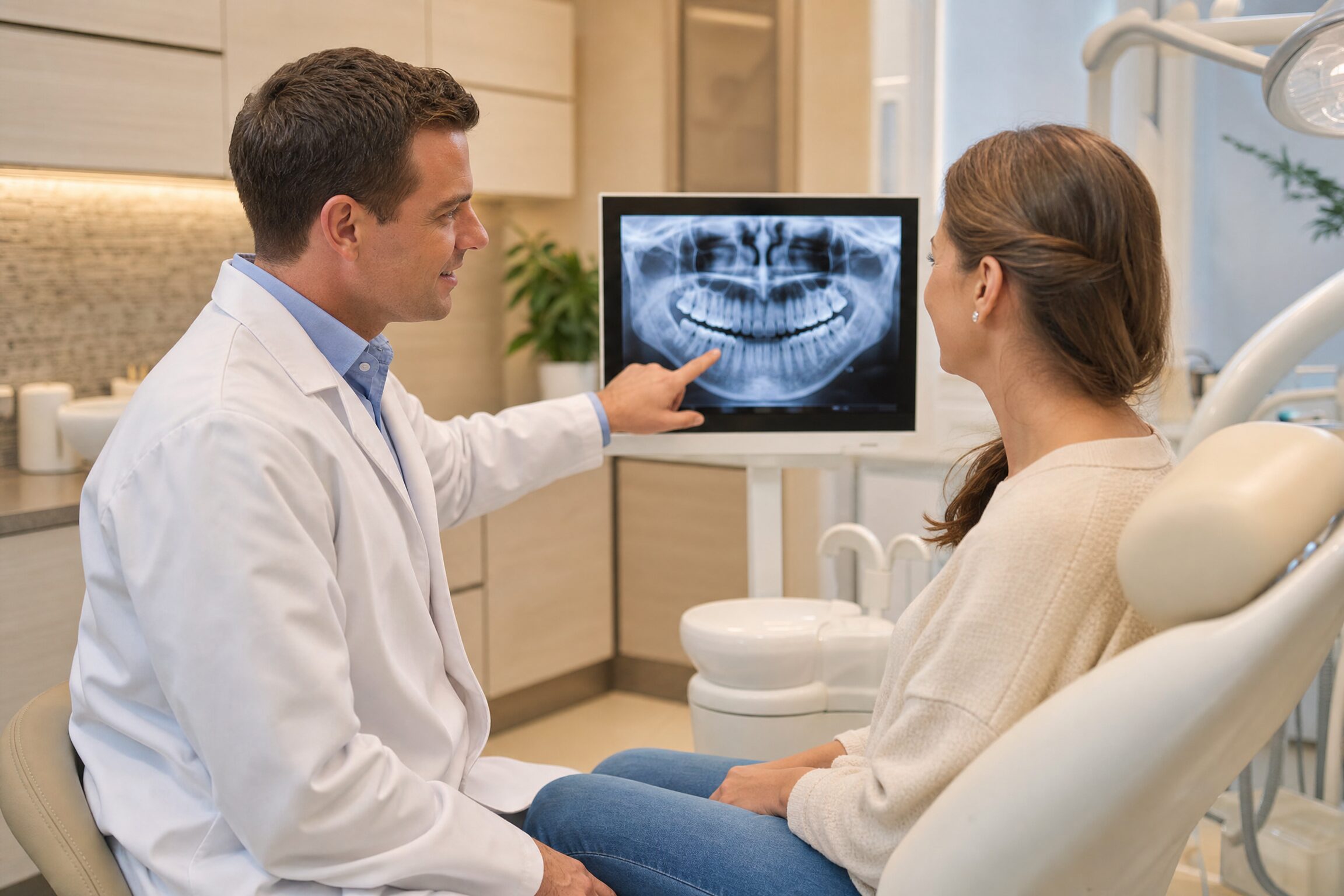
Not all tooth pain means you need a root canal, but certain symptoms are strong indicators that the nerve inside your tooth is compromised. Here is what to look out for.
Pain that is constant, throbbing, or worsens when you bite down or apply pressure is one of the most common signs of an infected tooth. This pain often radiates to your jaw, ear, or other teeth, making it difficult to pinpoint exactly which tooth is causing the problem. If over-the-counter pain medication isn’t helping, it’s time to see us.
It is normal for teeth to be slightly sensitive to a cold drink, but if the pain lingers for more than a few seconds after the hot or cold source is removed, it is a sign that the nerves and blood vessels inside your tooth are inflamed or dying. This type of lingering pain is a classic symptom of pulp damage.
If the gums around a specific tooth are swollen, tender, or darker than usual, it may indicate that an infection has spread from the inside of the tooth to the surrounding tissues. You might also notice a small, pimple-like bump on the gums, which is a sign of an abscess that needs immediate attention.
When the pulp inside a tooth dies, the tooth may begin to look darker, taking on a grayish or blackish hue. This discoloration is a clear sign that the tooth is no longer receiving healthy blood flow and requires endodontic treatment to remove the dead tissue and save the remaining tooth structure.
Your Questions, Answered Honestly.
Will a root canal hurt? Honestly, no. Modern root canal therapy is very similar to getting a routine filling. We use highly effective local anesthesia to completely numb the tooth and the surrounding area before we begin. You will feel pressure, but you should not feel any sharp pain during the procedure. In fact, most patients tell us the procedure was a massive relief from the toothache they came in with.
Can’t I just have the tooth pulled? You could, but extracting a tooth should always be the last resort. When you lose a tooth, the surrounding teeth will shift, your bite will change, and you will eventually lose bone mass in your jaw. Replacing an extracted tooth with an implant or bridge is almost always more expensive and time-consuming than saving it with a root canal and a dental crown.
How much does it cost? The cost of a root canal depends on which tooth is affected (molars have more roots and are more complex to treat). Most dental insurance plans cover a significant portion of endodontic treatment. Our front desk team will verify your benefits and give you a clear, itemized breakdown of your costs before we begin. We also offer flexible financing to make sure you can get the care you need.
Since 1983, Centerville Dental Center has been the trusted choice for restorative dentistry in Centerville, Oakwood, Springboro, Carroll, and Kettering. We know that hearing you need a root canal can be stressful, which is why we focus on providing a calm, comfortable, and highly professional experience from the moment you walk through our doors.
Our experienced dental team uses advanced imaging and techniques to accurately diagnose the source of your pain and treat the infection efficiently. We take the time to explain every step of the process so you know exactly what to expect. After your root canal, we will place a custom-crafted dental crown over the tooth to restore its full strength and function, ensuring it lasts for years to come. Don’t let fear keep you in pain—call us at 9346 Dayton Lebanon Pike, Centerville, OH 45458, and let us help.

A root canal typically takes between 60 to 90 minutes, depending on which tooth is being treated. Front teeth usually have only one root canal, making them faster to treat, while back molars can have three or four canals that require more time to clean and seal thoroughly. In most cases, we can complete the root canal therapy in a single appointment at our Centerville office.
In almost all cases, yes. When the infected pulp is removed from the inside of the tooth, the remaining tooth structure can become brittle and more prone to fracturing under the pressure of chewing. Placing a custom dental crown over the treated tooth restores its strength, protects it from further damage, and seals it against future infection. We will discuss the timeline for your crown placement during your visit.
Recovery from a root canal is usually very straightforward. You will likely experience some mild soreness or tenderness in the area for a few days, especially when chewing, as the surrounding tissues heal from the inflammation. This discomfort can typically be managed with over-the-counter pain relievers like ibuprofen. Most patients are able to return to work or their normal daily activities immediately after their appointment.
If the pulp inside your tooth is infected or dying, the only alternative to a root canal is to have the tooth completely extracted. While an extraction may seem like a quicker fix, losing a tooth can lead to a host of other dental problems, including bone loss and shifting teeth. We always recommend saving your natural tooth with a root canal whenever possible, as it is the most conservative and beneficial option for your long-term oral health.
If you are experiencing severe, throbbing pain, facial swelling, or a pimple-like bump on your gums, it is absolutely a dental emergency. These are signs of an active, potentially spreading infection. If you have these symptoms, do not wait — call our Centerville office immediately so we can get you in for an evaluation, relieve your pain, and determine if a root canal is necessary.